Sparse, over-tweezed, or thinning eyebrows are one of the most common beauty frustrations — and castor oil for eyebrows keeps coming up as the fix. But is there real science behind it, or is it just another social media myth? We went through the research so you don’t have to.
Castor Oil for Eyebrow Growth: What the Research Actually Says
Before we buy into any trend, it helps to ask: what’s the mechanism? Castor oil is pressed from the seeds of Ricinus communis, and its standout compound is ricinoleic acid, which makes up roughly 85–90% of its fatty acid profile. This is not a generic oil — ricinoleic acid has a uniquely hydroxylated structure that gives it properties most carrier oils simply don’t have.
A 2015 study published in the Journal of Cosmetic Science confirmed that ricinoleic acid acts as a prostaglandin E2 (PGE2) agonist. PGE2 is a signalling molecule that has been shown to stimulate the anagen (active growth) phase of the hair follicle cycle. In plain terms: it tells dormant follicles to wake up and start producing hair.
Does that guarantee full brows? No. But the biochemistry gives us a credible pathway — unlike purely anecdotal remedies with zero plausible mechanism.
Key Research Insight
Ricinoleic acid’s ability to bind prostaglandin receptors in follicle tissue is the same pathway targeted by some prescription hair-loss treatments — making castor oil one of the few natural oils with a pharmacologically relevant mechanism for stimulating hair growth.
Ricinoleic Acid Benefits for Hair Follicle Stimulation
Ricinoleic acid doesn’t just trigger growth signals — it works through multiple complementary pathways that support follicle health from the ground up.
- Anti-inflammatory action: Chronic micro-inflammation around follicles is a known contributor to hair thinning. Ricinoleic acid reduces local inflammation, creating a healthier environment for regrowth.
- Antimicrobial properties: It inhibits fungal and bacterial growth on the skin surface, reducing follicle-clogging that can stunt brow density.
- Deep penetration: Its low molecular weight allows it to penetrate the follicular canal more effectively than thicker oils like coconut or argan.
- Moisture retention: Castor oil forms an occlusive film that locks moisture into the hair shaft, reducing breakage — a critical factor for brows that seem thin due to brittleness rather than lack of growth.
The result is an oil that doesn’t just sit on the surface — it works at the level of the follicle itself.
How to Use Castor Oil on Eyebrows for Maximum Thickness
Most people use castor oil incorrectly and then wonder why it isn’t working. Application method and consistency matter enormously. Here’s the routine that actually gets results:
- Cleanse first. Remove all makeup and skin debris from the brow area. Follicle absorption is nearly impossible through a layer of product buildup.
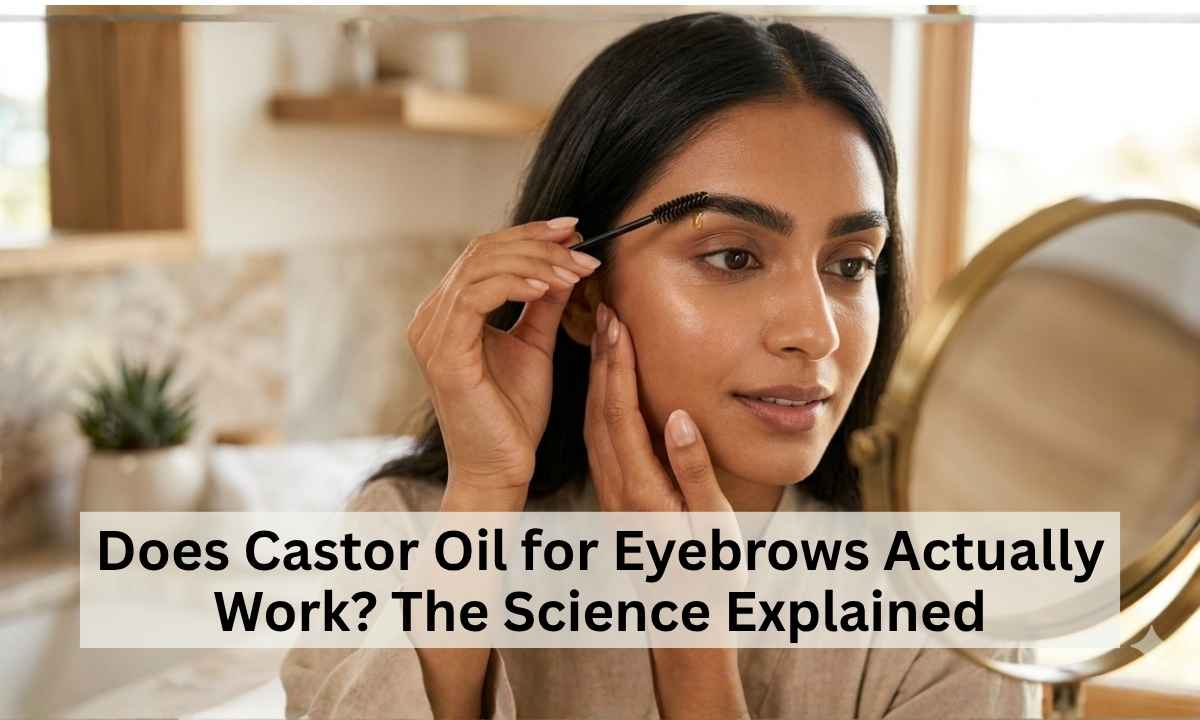
- Use the spoolie method. Dip a clean spoolie brush or cotton swab into cold-pressed castor oil. Brush through brows using short, upward strokes — this mimics the direction of natural growth and distributes oil into the follicle openings.
- Apply at night. Nighttime application allows the oil to sit undisturbed for 6–8 hours, maximising absorption and avoiding any interference with daytime products like SPF.
- Use sparingly. A tiny amount — literally a single drop — is sufficient for both brows. Over-application can block follicles and cause milia (small white bumps).
- Commit to 90 days. The eyebrow hair growth cycle runs approximately 4–6 weeks. Meaningful visible results require at least two to three full cycles of consistent use.
⚡ Pro Tip
Pair your castor oil application with a 30-second gentle brow massage using your ring finger. This boosts microcirculation to the follicles, delivering more nutrients and oxygen to the root — and it takes nothing but 30 seconds.
Cold-Pressed vs. Refined Castor Oil: Which Type Actually Works?
Not all castor oil is the same, and this distinction matters more than most people realise. Cold-pressed castor oil is extracted without heat, preserving the full ricinoleic acid content, antioxidants, and vitamin E. It’s pale yellow, relatively thin for a castor oil, and ideal for facial use including eyebrows. Refined castor oil is processed with heat and solvents, stripping many of its beneficial compounds — it’s cheaper but significantly less effective.
Side Effects of Castor Oil on Skin Around the Eyes
The skin around your eyes is the thinnest skin on the human body — up to 0.5mm, compared to 2mm elsewhere. This makes it responsive to active ingredients but also more vulnerable. Castor oil is generally well tolerated, but there are a few things to know before you start.
- Patch test first: Apply a small amount to your inner wrist and wait 24 hours. Castor oil allergy is rare but real — symptoms include redness, swelling, or itching.
- Avoid direct eye contact: If castor oil migrates into the eye, it can cause temporary blurring. This is not dangerous but is uncomfortable. Keep application precise.
- Puffiness risk: Some users experience morning puffiness around the eye if castor oil travels to the orbital area overnight. Using a minimal amount and applying only to the brow bone (not below it) eliminates this.
- Not compatible with all skin types: Very acne-prone or sensitive skin may react to castor oil’s occlusive properties. If you experience breakouts in the brow area within the first week, discontinue use.
For the vast majority of users, castor oil is safe for long-term brow use when applied correctly and in small amounts.
Natural Eyebrow Serum Ingredients That Enhance Castor Oil Results
Castor oil works best when it’s part of a targeted formulation — not just a stand alone raw ingredient. Combining it with synergistic actives can significantly amplify results. The most evidence-backed companions are:
- Biotin (Vitamin B7): Applied topically in a serum base, biotin strengthens the keratin infrastructure of each brow hair, reducing breakage at the shaft — the most common reason brows appear sparse.
- Peptides (e.g., Biotinoyl Tripeptide-1): Clinically studied to extend the anagen phase of follicle growth. Found in many professional brow serums and now available in clean beauty formulations.
- Vitamin E (Tocopherol): An antioxidant that protects follicle cells from oxidative stress, which is a primary driver of premature hair thinning. Cold-pressed castor oil naturally contains vitamin E, but a dedicated serum adds a more concentrated dose.
- Pumpkin Seed Oil: Rich in delta-7-stearine, a compound shown in clinical trials to inhibit DHT (dihydrotestosterone) at the follicle level — a key hormonal driver of brow and hair thinning.
The most effective approach is a two-step routine: a peptide-rich serum applied first to clean, dry brows, followed by a thin layer of cold-pressed castor oil to seal in the actives and support overnight follicle stimulation.
Castor oil for eyebrows isn’t wishful thinking — the chemistry is real, the mechanism is plausible, and thousands of consistent users have documented genuine results. The key variables are oil quality, application technique, and time. Get those three right, and sparse brows can genuinely become a thing of the past.
Ready to Start Your 90-Day Brow Journey?
Our cold-pressed castor oil is 100% hexane-free, single-origin, and specifically formulated for facial use — including the delicate brow and lash area. SHOP NOW!