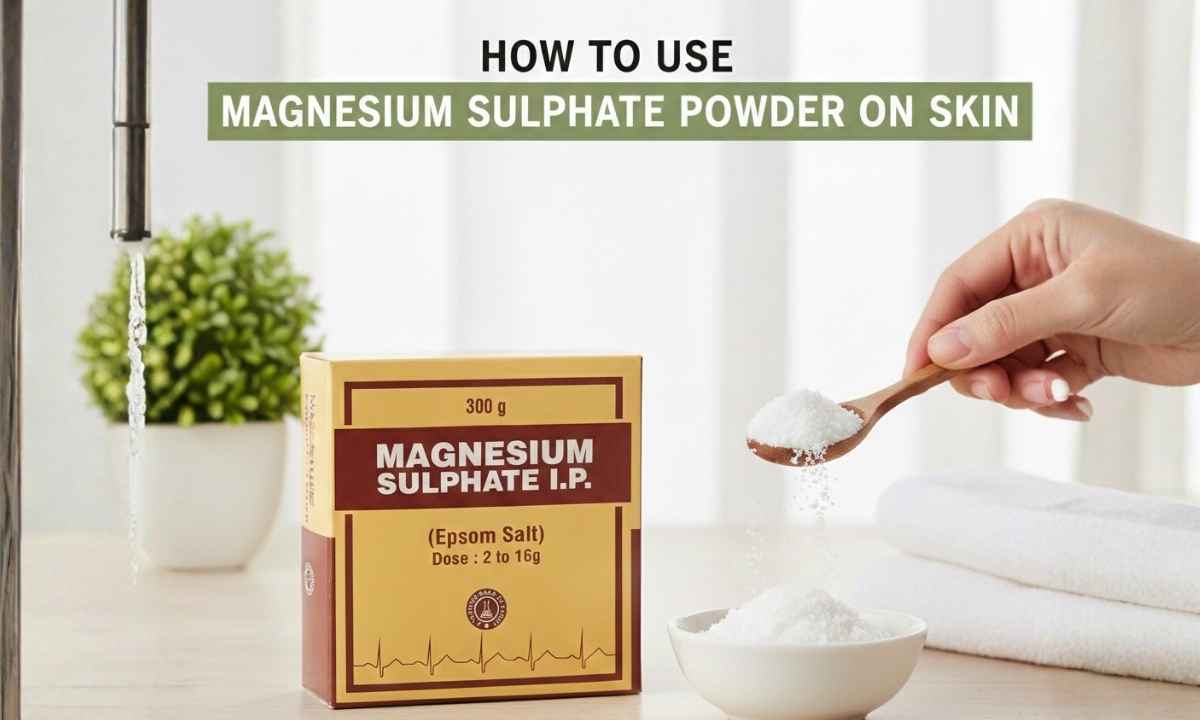
Magnesium sulphate also called Epsom salt, is a mineral compound people have used as a natural remedy for hundreds of years. Many think of it as a way to relax muscles after working out hard, but it can do much more than just ease soreness. This simple white powder can make a big difference for people who love skincare and those with minor skin problems.
But be careful – it’s strong stuff because it’s a salt compound. If you don’t use it right, it might dry out your skin or cause irritation. To treat a stubborn boil smooth rough skin, or calm inflammation, you need to know how to apply it . This guide will explore the science and practical steps on how to use magnesium sulphate powder on skin safely and effectively.
Benefits of magnesium sulphate for skin health
It’s good to know what a mineral does before you put it on your skin. Magnesium sulphate doesn’t just scrub your skin; it has a chemical effect too.
The main plus is the magnesium. A lot of people don’t get enough magnesium, and while experts argue about how well skin absorbs it, many say soaking in magnesium-rich water can make skin softer and less inflamed.
Also, magnesium sulphate pulls in water. When you use it on certain skin problems, it draws out moisture—and with it nasty stuff or germs—from your skin. This makes it great to clean pores and reduce swelling. If you learn to use magnesium sulphate powder on your skin, you can use these water-drawing properties to treat small infections and rough skin without harsh chemicals.
Magnesium sulphate paste for boils and acne
People often search for information about this mineral’s effectiveness in treating local infections. Painful and slow-healing conditions like boils, splinters, and deep cystic acne can be challenging to manage. Magnesium sulphate has gained popularity for its pulling effect. It creates a solution with higher concentration that pulls fluid from the boil, which can help bring the infection up and speed up draining.
The “Pulling Paste” Recipe: To treat a specific area, you need a thick paste instead of a thin solution.
- Ingredients: Take 1 teaspoon of Magnesium Sulphate powder and about half a teaspoon of hot water (or iodine for extra antiseptic power).
- Mix: Stir until the crystals partially dissolve, creating a thick, gritty paste.
- Apply: Place the paste directly onto the boil, splinter, or cyst.
- Cover: Cover the area with a clean bandage or medical tape.
- Wait: Leave this on for 15 to 20 minutes (or overnight for splinters).
- Rinse: Remove the bandage and wash the area with warm water
This method plays a key role in using magnesium sulphate powder on skin to provide direct relief. It works better than squeezing since squeezing can harm tissue and spread bacteria.
How to make an Epsom salt bath for skin inflammation
This method plays a key role in using magnesium sulphate powder on skin to provide direct relief. It works better than squeezing since squeezing can harm tissue and spread bacteria.
How to Prepare an Epsom Salt Bath to Ease Skin Irritation
If you are trying to deal with widespread skin problems like acne on your back, psoriasis, or constant itching, using a paste can be inconvenient. A relaxing bath is a better option in such cases. Magnesium can lower cytokines, which are signs of inflammation within the body.
Steps to Take for Soaking:
- Get the Water Ready: Fill your bathtub with warm water that is not too hot. Using very hot water can harm the skin by removing natural oils if you have eczema or psoriasis.
- Add and Mix the Salts: Put 2 cups of Magnesium Sulphate powder into the water as it runs. Make sure the crystals dissolve so they do not irritate your skin.
- Relax and Soak: Sit in the bath for 15 to 20 minutes.
- Rinse Off Properly: Do not skip this part. After your bath, rinse yourself with cool fresh water. Leaving salt on the skin might dry it out or make it itch, which ruins the whole process.
- Moisturize: Put on a thick lotion or body oil right after you wash, while your skin is still wet.
Can you use magnesium sulphate on your face?
Facial skin is much thinner and more delicate than the skin on areas like your back or feet. Many people wonder if this rough-textured powder is okay to apply on the face. The short answer is yes, but you need to be very careful.
When figuring out ways to use magnesium sulphate powder on your skin as a facial scrub, avoid harsh or forceful scrubbing. The sharp edges of the crystals might create tiny tears in your skin’s protective layer.
A Gentle Way to Scrub Your Face:
- Combine with a Cleanser: Skip the water. Blend half a teaspoon of the powder with your usual cream cleanser or a carrier oil like almond or jojoba oil. The oil or cream creates a smooth barrier to shield your skin.
- Gentle Massage: Use circular motions to massage for about 30 seconds. Spend more time on areas like the nose and chin where blackheads are common. Stay away from your cheeks if your skin is sensitive or if you have rosacea.
- Thorough Rinse: Rinse everything away using cool water.
This technique helps clear out blackheads and gets rid of dead skin cells, which makes your face feel softer. do this once a week to protect your skin’s natural oils.
Magnesium sulphate effects on the skin
Magnesium sulphate though natural, is still a chemical compound and may cause bad reactions if not used . Understanding how to apply magnesium sulphate powder on skin also includes knowing when to avoid using it.
- Dehydration: Salt pulls water out of your skin. If you overuse it and don’t follow up with a moisturizer, your skin might end up rough, dry, and itchy.
- Stings on Cuts or Wounds: While salt works well to draw out infections from closed boils, putting it on an open wound or cut can burn a lot and might bother the tissue that’s trying to heal.
- Skin Sensitivity or Allergies: This doesn’t happen often, but some people might react to sulfur compounds. Test a small patch on your arm before using it on your face or soaking in it.
Conclusion
You can add magnesium sulphate powder to your skincare routine because it can do a lot of things. It helps with exfoliating taking care of infections, and more. It’s an affordable and easy way to remove splinters soothe back acne, and soften rough heels.
The most important thing to remember about how to use magnesium sulphate powder on skin is not to overdo it. This salt is strong so treat it with care. Make sure to moisturize your skin afterward, don’t scrub too hard, and pay attention to how your skin responds. Sticking to these tips will help you enjoy the benefits of this mineral.
Asked Questions
Q1: Can I keep magnesium sulphate on my skin overnight? Experts advise against leaving magnesium sulphate powder or strong solutions on your skin overnight, except when it is applied to treat a specific issue like a splinter or boil under a bandage. Leaving salt on your skin for hours may cause a lot of dryness and irritation, so it is not a good idea for regular skincare.
Q2: Does magnesium sulphate get rid of skin fungus? Magnesium sulphate makes the area less welcoming to certain bacteria and fungi by pulling out moisture. It can provide relief for symptoms like itching caused by conditions such as Athlete’s Foot. However, it is not a proper antifungal treatment on its own. It works better when you use it with antifungal medicines provided by your doctor.
Q3: How often can I use magnesium sulphate on my skin? You can use it on your face once every week to exfoliate. To soak your body for easing sore muscles or calming skin irritation, using it 2 or 3 times a week is fine. Just remember to rinse it off and apply moisturizer afterward.
Q4: Is magnesium sulphate like table salt? Not at all. Table salt is Sodium Chloride, but Magnesium Sulphate is a different compound. Both can work as exfoliants; however, Magnesium Sulphate feels gentler and also allows your body to absorb magnesium, which table salt lacks.
Q5: Does magnesium sulphate work on wrinkles?
There isn’t any proof from clinical studies that magnesium sulphate can reduce wrinkles. But it might help your skin look smoother and brighter by removing dead skin and boosting blood flow during massage.